A Synthesis of Alchemical Strategy, Architectural Sovereignty, and the Restoration of the Sanctuary of Blue
We stand at the threshold of a profound cultural and economic transmutation. The following article bridges the gap between commercial viability and aesthetic transcendence. Using the dormant stones of Saint Joseph’s Church in Albany, New York, as our primary vessel, we shall apply the rigor of financial modeling, the nuance of historical restoration, and the visionary scope of business strategy to architect a new paradigm of belonging for the Luminous Strange.
Vellum and Void
The Phenomenology of the Physical Codex
In an era defined by mass production, algorithmic engagement, and overwhelming digital noise, the path to authentic selfhood has become increasingly obscured. The Crisis of the Threshold in the modern age is not merely a lack of physical space but a lack of tactile depth. As traditional educational and wellness institutions have stripped away the power of Myth and Symbol, the physical codex—the book as an object of power—emerges as a necessaryFixed Salt in a volatile world. The phenomenology of the physical codex, specifically within the context of the Philos Mystica identity, is rooted in the rejection of the ephemeral in favor of the archival.
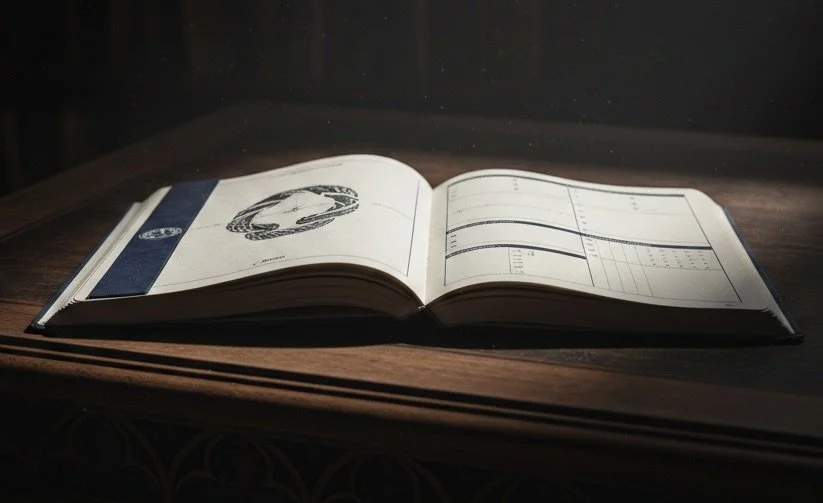
The Digital Scriptorium serves as the Volatile Mercury of our model, but it is the physical ledger that provides the Sacred Container. When a seeker engages with a physical codex, they are participating in a sensory ritual that digital simulations cannot replicate. Scholarly interest in phenomenology confirms that the material properties of books—the texture of the paper, the fingerprint of the pressman, the lightness of the binding—offer essential clues about the place of that text in a larger social and economic context. Laptop screens and mobile devices, in their sleek manufactured elegance, efface these clues, rendering the experience of reading and writing irredeemably partial.
Within the architectural footprint of Saint Joseph’s, the Wing of Mercury houses the Firinne Library, where the phenomenology of the codex is elevated to a scholarly anchor. The material specifications for the Philos Mystica ledgers—A5 hardcover, Smyth-sewn binding, 120gsm acid-free cream parchment—are intentional architectural decisions for the soul. Smyth-sewn binding, which allows the book to lay flat, is critical for the Sovereign Scholar who requires an unhindered surface for Narrative Alchemy. This flat surface mirrors the expansive floors of the Nave, providing a theatre of knowledge where the individual can map their own psyche without the cognitive tax of a closing book or a flickering screen.
The financial logic behind the physical codex is as robust as its binding. High-margin retail offerings, such as the $5,000+ Athanor Boxes which contain consecrated objects and limited-edition ledgers, provide the Sulfur required to fuel the Salt of our inclusive housing and clinical services. These objects are not merely inventory; they are artifacts of becoming that justify a premium price point through their unique provenance and sensory richness. In the Experience Economy, the exclusivity of a 150-year-old Nave with stained glass filtering light onto a hand-bound book creates a Monopoly on Awe that digital alternatives cannot commoditize.
The transition from a digital follower to a physical resident of the Sanctuary of Blue begins at the Gate of Ink. The subscription model for the Digital Scriptorium, targeting a 5% conversion rate from a community of 30,000+ followers, provides the recurring revenue necessary to maintain the physical library. However, it is the Gate of Sight— the acquisition of the physical artifact—that establishes the deep, integrated trust required for the Sovereign Scholar to commit to full-time enrollment or residency. By reclaiming the physical codex, we are not merely selling a product; we are restoring the School of the Soul where the marginalized and the seeker can unveil their true self and thrive as the architects of their own narratives.
Nigredo in Stone: The Surgical Salvation of 19th Century Masonry
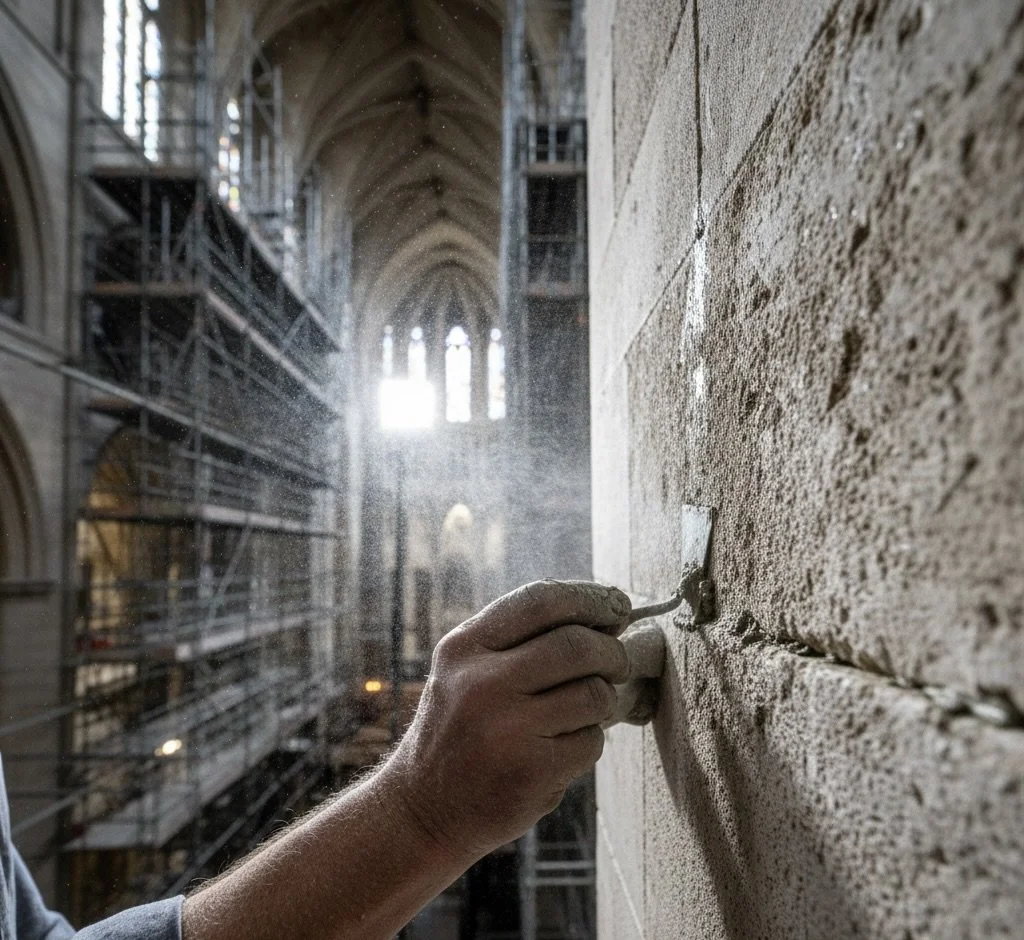
The restoration of Saint Joseph’s Church is an act of Alchemical Nigredo—the essential blackening, putrefaction, and purification of the material before it can be transmuted into gold. As a masterpiece of Gothic Revival architecture designed by Patrick Keely and completed in 1860, the building at 38 Ten Broeck Street represents the Fixed Salt of our project. Yet, after thirty years of dormancy and decay, the stone itself is in crisis. Large holes in the roof, visible from Interstate 787, have allowed water to penetrate the blue limestone and Ohio sandstone facade, leading to localized masonry collapse and severe spalling.
Spalling is a condition where moisture trapped within the stone expands during Albany’s harsh freeze/thaw cycles, causing the surface to flake or crumble. To halt this deterioration, a surgical restoration protocol is required, emphasizing a soft-over-hard repointing strategy. In historic masonry, the mortar must be the sacrificial element; if the mortar mix is higher in compressive strength than the stone units, the stresses of thermal expansion will be relieved through the limestone, leading to irreversible structural cracking. The technical standard for this salvation utilizes a Type N mortar mix, ensuring the vapor permeability necessary for the building to "breathe".
The physical stabilization of the 17,520-square-foot structure is aided by a significant architectural advantage: the presence of an early steel frame. Despite the localized collapse of the sacristy in 2017, this frame has preserved the building’s overall stability, allowing us to direct our $20,000,000 capitalization toward restoration and systems integration rather than total foundational reconstruction. Phase 1 of the restoration focuses on the Dry-In stabilization, which includes remediation of biological hazards—such as the removal of decades of pigeon guano—at a benchmark cost of $2.50 to $6.50 per square foot.
Financial risk management for a project of this magnitude requires the sophisticated use of the Tax Equity Engine. By restoring a National Register-eligible landmark, Philos Mystica generates Trapped Gold in the form of Federal and New York State Historic Tax Credits (HTCs). These credits return 40% of qualified rehabilitation expenditures (QREs) to investors, representing an $8,000,000 equity injection over the life of the restoration. Furthermore, the project’s location within a designated Opportunity Zone allows investors to achieve permanent exclusion from capital gains taxes on the appreciation of their investment, provided it is held for at least ten years.
The architecture of the Surgical Salvation is not limited to the exterior stone. The transformation of the lower levels into the Alchemical Spa and Natatorium utilizes the building’s thermal mass for natural temperature regulation. By implementing a geothermal standing column well system, we reduce fixed operational heating and cooling costs by 81% annually, creating a Recession Hedge that ensures the building remains viable even during fluctuations in discretionary spending. This intersection of 19th-century masonry and 21st-century engineering is the hallmark of the Steward of Alliances, ensuring that the Sanctuary remains a Fixed Salt in the storm of modern economic volatility.
The Labyrinth: The Unicursal Path to Individuation
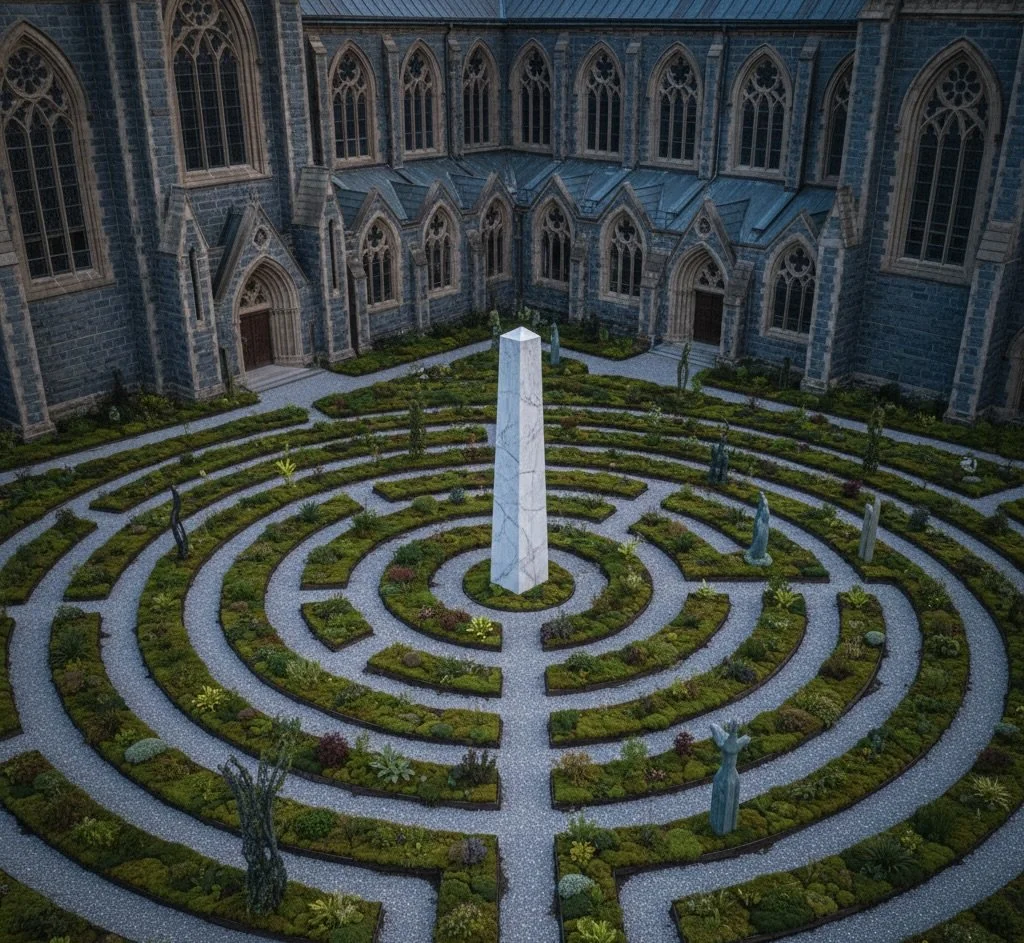
The concept of the labyrinth, as distinct from a maze, represents a unicursal path—a single, non-branching route that leads the seeker to the center and back again. In the psychological framework of Carl Jung, this journey is synonymous with individuation: the process of integrating the disparate parts of the self into a cohesive whole. Within the 0.83-acre lot of the Saint Joseph’s campus, the labyrinth is manifested through the Botanical Sculpture Garden and community trailhead. This biophilic intervention serves as the Sacred Threshold, grounding the Salt of the seeker in the restorative power of nature before they enter the vaulted expanses of the Nave.
Biophilic design—the use of natural forms and patterns to foster a restorative environment—is central to the architectural sovereignty of Philos Mystica. Research indicates that fractal patterns, such as those found in the Gothic tracery of Keely’s columns and the natural growth of the botanical garden, activate the parasympathetic nervous system, lowering stress and improving cognitive focus. For the neurodivergent Luminous Strange, these sensory-regulated environments are not just a luxury; they are a form of Sacred Infrastructure that allows for deep transformative work.
The labyrinthine movement through the Sanctuary is designed to balance Mercury (intellectual exploration) and Sulfur (creative expression). The Nave, with its soaring 60-foot ceilings and fourteen monolith marble columns, functions as a Theatre of Knowledge for the Philos Mystica University. Yet, to facilitate both intimate study and massive musical rituals like the Carnival of Blue, the space requires zoned acoustic treatment. Non-invasive greenery, such as preserved moss panels, is installed within the transept to provide essential dampening for the Nave’s reverberant echoes without penetrating the historic limestone.
The financial viability of the labyrinth model is predicated on Cross-Subsidization. High-capacity revenue from the quarterly flagship festivals, which utilize the Nave’s 235-foot verticality for aerial arts and immersive music, funds the maintenance of the botanical grounds and the accessibility of our wellness services. By positioning Albany as a national destination for the Modern Pilgrimage, Philos Mystica captures a high-net-worth segment from the Hudson Valley and NYC corridors who are actively searching for destination-based cultural experiences that offer more depth than a standard retreat. This integrated ecosystem ensures that every step through the labyrinth—from the Gate of Ink to the Gate of Stone—is a part of a self-reinforcing revenue cycle that honors the sovereignty of the seeker.
The Tria Prima of the Household
The organizational architecture of Philos Mystica is modeled after the alchemical Tria Prima—Salt, Mercury, and Sulfur—as defined by Paracelsus to represent the body, mind, and spirit. In our $20,000,000 transmutation of Saint Joseph’s, these three principles are not mere metaphors; they are the functional wings of a multi-million dollar Experience Economy hub.
The Wing of Salt represents the foundation of physical safety and embodied wisdom. Within the cathedral’s surrounding assets, we provide Firinne Haven—20 units of supportive residency specifically designed for LGBTQIA+ youth and neurodivergent adults facing housing instability. The Crypt of Wellness, located in the subterranean levels of the church, utilizes the grounding acoustics of heavy stone masonry to create a meditation sanctuary and yoga center. This wing is the Fixed reality of the marginalized body, ensuring that the sanctuary remains a permanent haven where individuals can move from survival to sovereignty.
The Wing of Mercury is the intellectual heart of the mission, facilitating the awakening of the mind through multidimensional learning. Within the Hidden Library of the transept and the grand expanses of the Nave, we offer accredited degrees in mythology, symbolic studies, and creative arts. Mercury represents the fluid energy of translation; when a seeker is confused by the Strange, our stewards do not lecture—they guide with the voice of the Scholar. This wing includes the Digital Scriptorium, a scalable content hub that allows our curriculum to reach a global audience, independent of the building’s physical limits.
The Wing of Sulfur is the ignition of the spirit through authentic expression and economic empowerment. The Nave Boutique and the Carnival of Blue festivals serve as a world-class stage for artisanal commerce and immersive ritual. Sulfur is the fire of expression that fills the cathedral with life and light, empowering marginalized creators to master their craft in professional-grade ateliers. Financially, the Sulfur wing is the engine of Sacred Commerce, generating high-margin revenue from $15,000+ Nave rentals and premium retail sales that cross-subsidize the Salt wing.
The management of this Tria Prima is overseen by the Quaternary Leadership Circle, a balanced governance structure that includes the Sovereign (Vision), the High Sacristan (Facilities), the Chancellor of the Hidden Library (Academics), and the Chancellor of the Exchequer (Finance). This circle ensures that every decision passes through a blue and silver filter, maintaining the aesthetic of the Sanctuary while ensuring long-term fiscal stability. By weaving together these three pillars under one magnificently vaulted roof, Philos Mystica solves the crisis of the Fragmented Soul, providing a holistic environment where transformation and growth can flourish.
Queer Mythologies: Reclaiming the Night Sea Journey
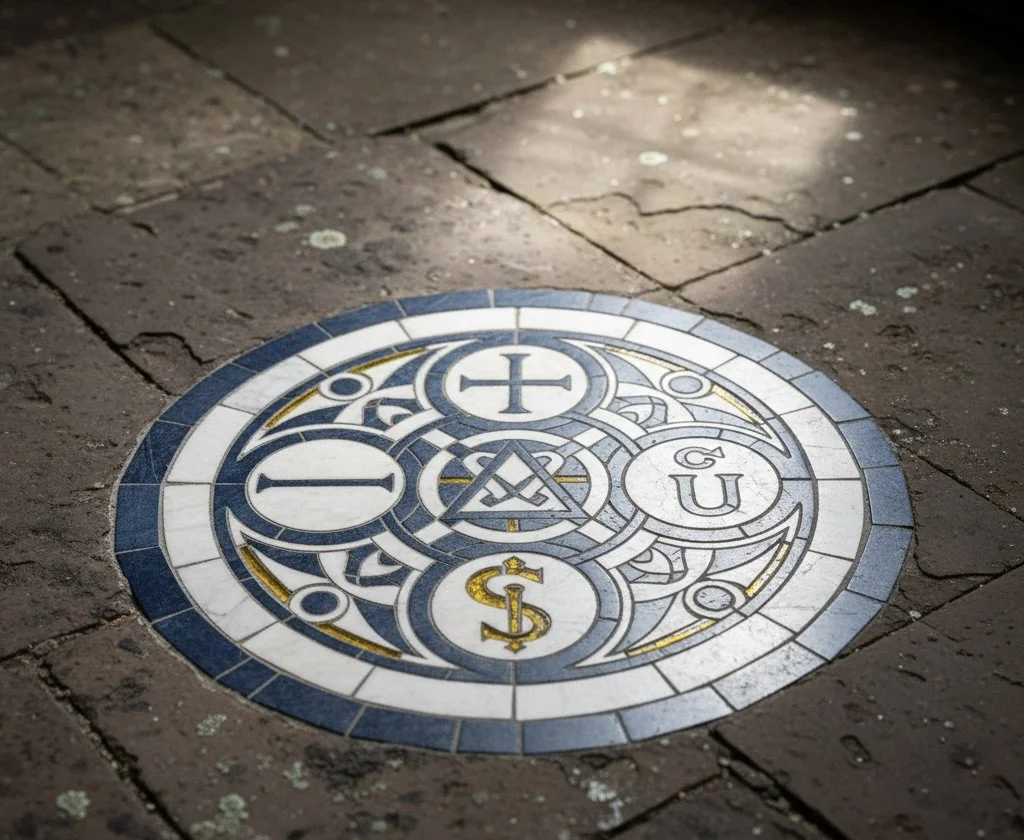
The search for meaning in a complex world requires the reclamation of Myth, Symbol, and Storytelling—tools that have been systematically eroded by traditional institutions. For the Luminous Strange, whose identities have often been erased from conventional history, the lack of access to esoteric wisdom results in a profound sense of isolation.Philos Mystica addresses this crisis of meaning through the lens of queer mythologies, specifically the reclamation of the Night Sea Journey.
In Jungian psychology, the night sea journey (nekyia) is an archetypal descent into the unconscious, a journey beyond consciousness where the individual encounters the Shadow and the Anima/Animus. This journey is a common step in the "coming out" process for LGBTQIA+ individuals, characterized by initial confusion and a loss of social identity, followed by a life-changing moment of emotional intensity that transforms guilt into relief and joy. By framing this experience as a Sacred Story rather than a clinical pathology, Philos Mystica allows the seeker to re-map their own psyche.
The Museum of the Queer, located within the ambulatory of Saint Joseph’s, acts as a permanent repository for these recovered narratives. Under the luminous light of the restored figural glass, the museum features artifacts and oral traditions that reclaim the lost history of marginalized ancestors. This is not merely an act of cultural heritage; it is a Narrative Moat that prevents the brand from being perceived as a generic metaphysical shop. The curriculum of Philos Mystica University (PMU), specifically the Grimoireology methodology, provides the intellectual framework for this reclamation, bridging ancient wisdom traditions with contemporary critical theory.
Mythological Concept/Psychological Function/Sanctuary manifestation/Market Outcome
Night Sea Journey: Descent & Rebirth - Museum of the Queer - Identity Synthesis
The ShadowWisdom in IsolationCrypt of WellnessTrauma-informed healingSacred StoryNarrative OwnershipPMU CurriculumAlternative AccreditationAncestral RecoveryHistorical ValidationBolton WindowsCommunity Loyalty
The "Silver Tsunami"—the nearly 7 million LGBTQIA+ seniors who will identify as such by 2030—represents a critical demographic for this mythological reclamation. These elders often face a "Crisis of the Threshold" in traditional senior living facilities, where the "closet fear" leads to accelerated health decline. Philos Mystica’s model of "Inclusive Longevity" offers these seniors a sanctuary where their lived history is preserved in the "Lapis light" of our stained glass. By integrating "Intergenerational Scriptoriums," where elders (Sages) guide younger scholars, we create a self-sustaining community of meaning that transcends the "smallness" of systemic bias.
Narrative Illumination: The Bolton Windows
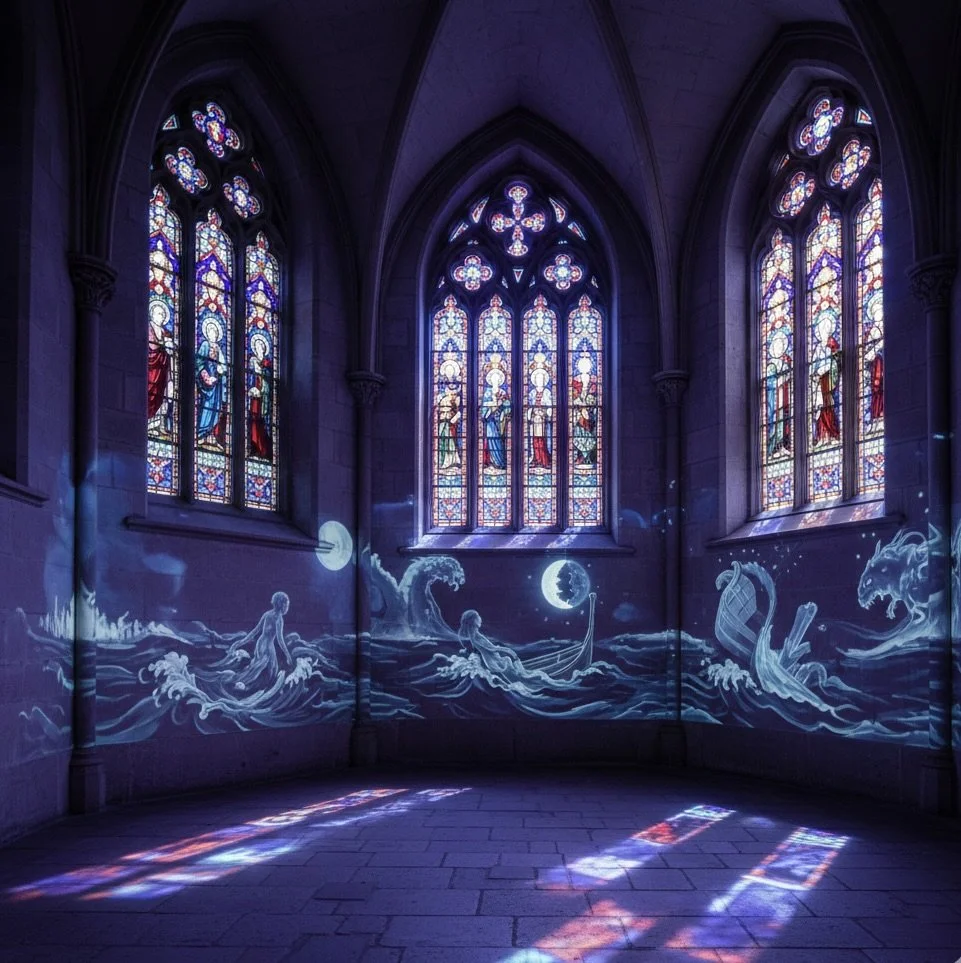
The architecture of Saint Joseph’s is its most potent competitive advantage, an "Awe Monopoly" that provides an immediate emotional impact contemporary buildings cannot achieve. Central to this impact are the sixteen stained glass windows, which include figural glass by the Bolton Brothers—pioneers of the first figural stained glass produced in the United States. These windows are more than decorative; they are instruments of "Narrative Illumination," designed to evoke an inspirational effect through monumentality and the language of light.
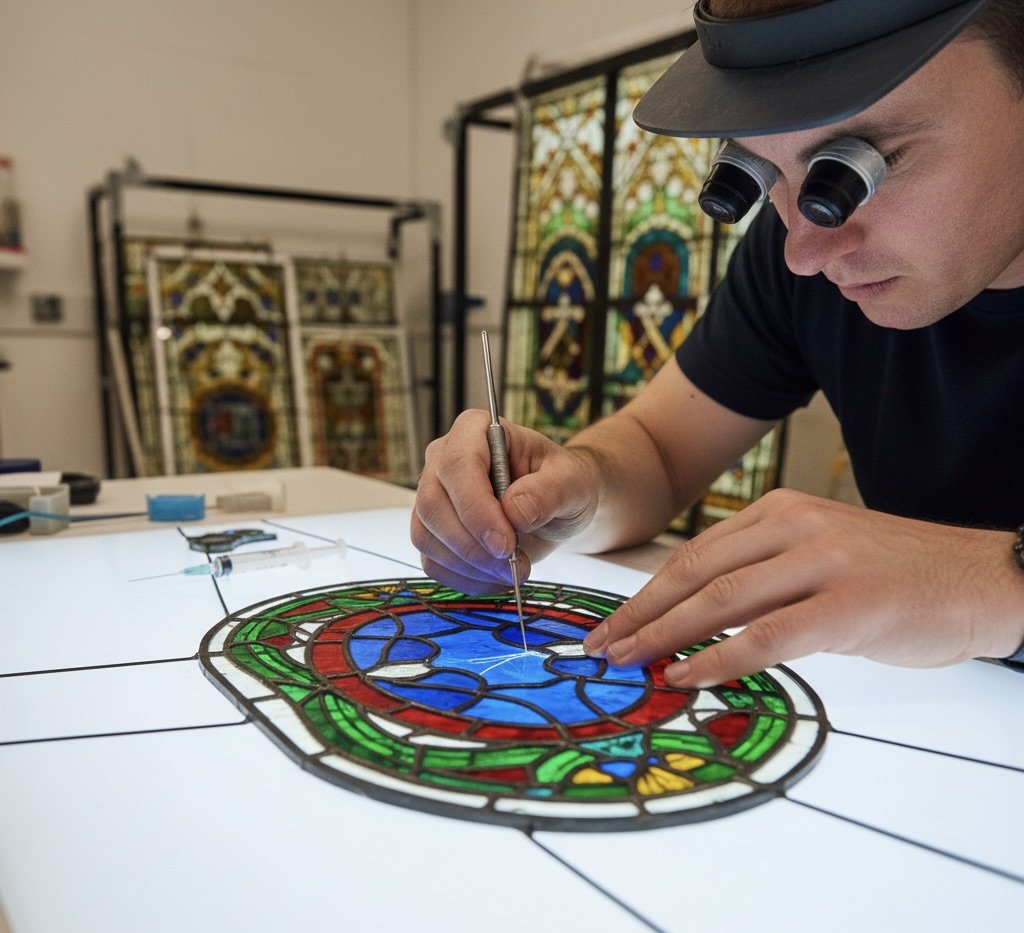
The conservation of the Bolton windows is a critical requirement of the "Alchemical Nigredo" phase. Decades of exposure have led to the "spider-webbing" of lead cames and the fading of colors. The restoration protocol involves dismantling the panels for studio conservation, where individual segments are cleaned and edge-glued with restoration epoxies. To ensure their longevity, a new hurricane-grade clear protective glazing system will be installed on the exterior, utilizing a ventilation gap to prevent moisture buildup and the yellowing of the glass.
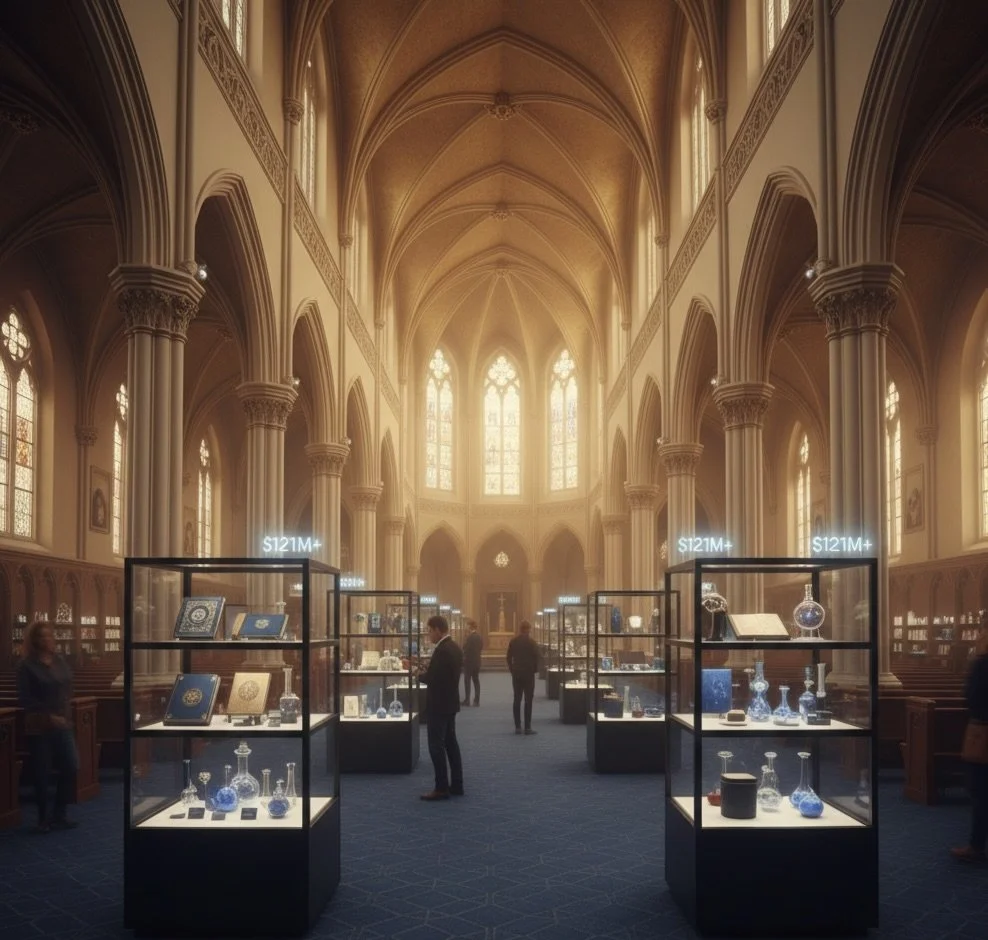
In the Nave Boutique, this "Language of Light" is integrated into the "Athanor" retail fixtures. These fixtures are designed to harmonize with Keely’s 1860 blue limestone and fourteen monolith marble columns without imposing a "cognitive tax" of modern clutter. We utilize low-iron, anti-reflective floating glass and minimalist steel hardware to create display cases that appear to float between the monoliths. Integrated LED "Moonlight" rails, hidden within walnut cornices, provide dynamic, diffuse light that mimics the shifting patterns through the Bolton windows.
Stained Glass ComponentConservation StatusStrategic FunctionAesthetic AssignmentFigural PanelsStudio RestorationNarrative IlluminationVisual validation of storyLead CamesRe-leading requiredStructural IntegrityFixed Salt (Bonding)Exterior GlazingHurricane-grade installationLong-term ProtectionProtective AegisLED "Moonlight"Integrated with fixturesProduct IlluminationNarrative Lighting (Pattern 6)
The architectural intervention of light extends to the "Master of Shadows and Light," an immersive technical director tasked with operating the Nave’s $350,000 permanent laser projection and spatial audio systems. These systems allow the cathedral to transition from a place of "Subterranean Wellness" in the Crypt to a "High-Altitude Theatre" in the Nave, where the world-class acoustics of the stone vaulting are leveraged for "Frequency Healing" and immersive festivals. This use of light and sound is the final stage of "Solve et Coagula," breaking apart the seeker’s previous experiences of sterile retail and education to recombine them into a unified ritual of transformation.
The Crisis of the Threshold: Accessibility as Sacred Infrastructure
The "Crisis of the Threshold" is both a psychological and a regulatory challenge in the adaptive reuse of historical landmarks. Converting a 17,520-square-foot religious institution into a mixed-use residential and educational campus triggers the full requirements of Title III of the Americans with Disabilities Act (ADA). For Philos Mystica, accessibility is not a bureaucratic "add-on" but a core component of "Sacred Infrastructure," ensuring that the sanctuary is physically safe and welcoming for all, regardless of mobility or neurological profile.
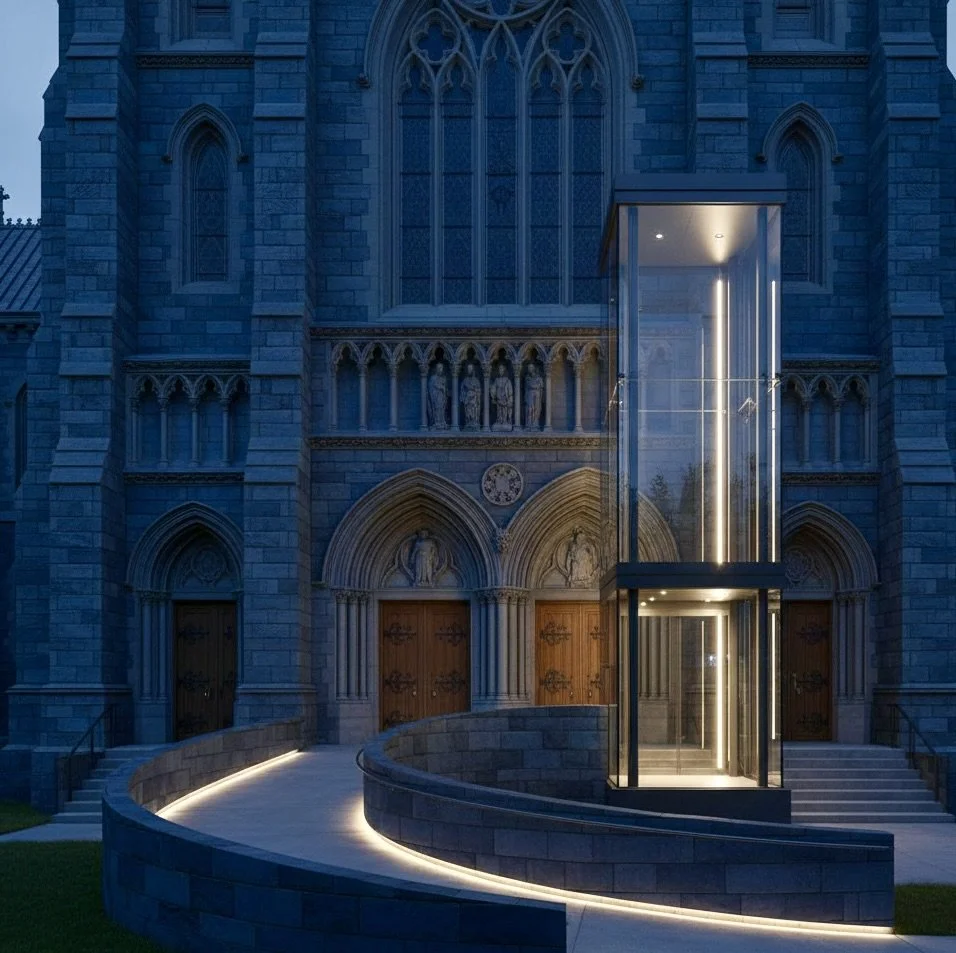
Traditional architectural interventions for accessibility, such as clinical metal ramps, often create a visual barrier that undermines the "Intended Entry Experience" of a Gothic cathedral. The Sage architect instead proposes a permanent, stone-clad ramp integrated into the side entrance, utilizing the same blue limestone as the original 1860 facade. This intervention fulfills the "Maximum Extent Feasible" standard of the ADA while preserving the visual symmetry and historical integrity of Patrick Keely’s design.
Vertical access to the mezzanine library, the choir loft ateliers, and the 235-foot main spire is achieved through a minimalist glass elevator. This "Modern Adaptation" allows seekers to experience the "high-altitude" resources of the Sanctuary without compromising the architectural awe of the Nave. By providing sensory-regulated zones—characterized by intentional acoustics, low-flicker lighting, and predictable social scripts—Philos Mystica offers "Safety as a Product," a luxury good that remains largely inaccessible in conventional commercial or educational settings.
Accessibility BarrierTraditional Clinical SolutionPhilos Mystica "Sacred" SolutionStrategic ValueEntry ElevationTemporary metal rampsIntegrated stone-clad rampPreservation of dignity & arrivalVertical ReachRestricted / StairsMinimalist glass elevatorAccess to "high-altitude" IPOverstimulationFluorescent lightingFlicker-free, warm-spectrum LEDSensory safety for neurodiversityCommunication"Retail Speak""Hospitality to the Soul"Inclusive community script
The financial management of these "Sacred Installations" involves their categorization as "Leasehold Improvements" within the LivePlan forecast. By treating these costs as startup expenses rather than long-term assets, we impact the Gross Margin directly during the "Nigredo" setup phase (Months 13–18), while potentially funding their acquisition through "Gargoyle Patron" memberships or state heritage grants. This strategy ensures that our commitment to "Inclusive Excellence" is grounded in rigorous financial logic, making the Sanctuary of Blue both a necessary social intervention and a high-growth "Experience Economy" powerhouse.
The Raven: Messenger of the Alchemical Nigredo
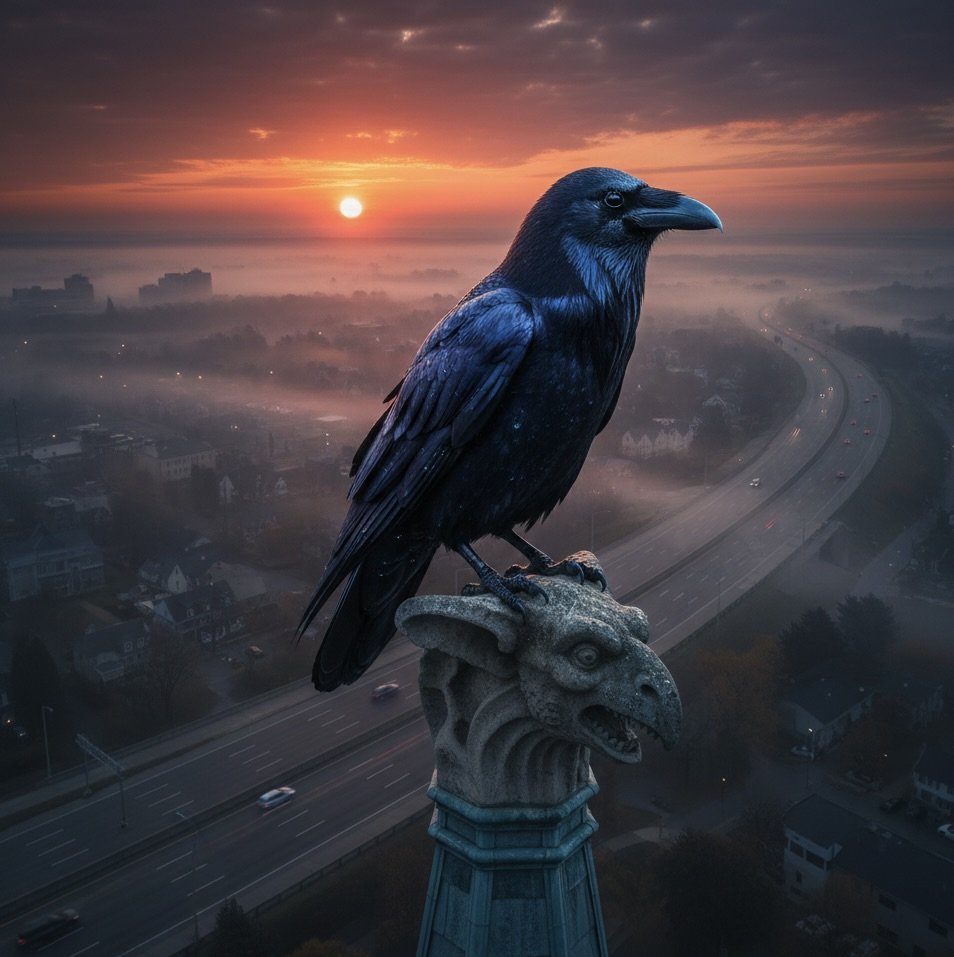
In the symbolic language of alchemy, the raven is the messenger of the "Nigredo"—the initial state of chaos and putrefaction that precedes transformation. As a psychopomp, the raven connects the Ego with the unconscious, representing the personal shadow as a wisdom figure capable of revealing what is unseen. For Philos Mystica, the "Raven" is the embodiment of the founder’s journey from St. Louis to Albany, transmuting a Bipolar 1 diagnosis from a clinical liability into a "Strategic Asset".
The "Nigredo" phase of our business plan (Months 1–12) is a period of intellectual fluidity, focusing on the "Mercury" of the brand without a physical anchor. During this incubation, we utilize the "SSA Plan to Achieve Self-Support (PASS)" to set aside resources for business goals, converting "Inner Salt" into the startup capital required for B-Corp formation. The raven teaches us how to take the unformed and give it any form we desire; similarly, we are "trapping gold" in the Grimoireology curriculum and the digital community long before we touch the stone of the church.
The "Save the Stone" digital campaign functions as the messenger of this phase, building a community of "Seekers" who represent the "matching social capital" required to secure $3,500,000 in impact investment. By sharing "Letters from the Night"—content that bridges mental complexity with symbolic studies—the founder builds a high-trust relationship with the LGBTQIA+ and neurodivergent communities. This authenticity is our most valuable resource, creating a "Psychological Moat" that ensures the Sanctuary remains a "Fixed Salt" in the event of market volatility.
Alchemical SymbolPsychological MeaningBusiness PhaseStrategic ActionThe RavenMessenger of the ShadowIncubation (Nigredo)Lived Experience as IPBlacknessPutrefaction / ChaosMonths 1–12Bootstrapping & PASS ProgramForgotten LoreUnseen WisdomDigital ScriptoriumBuilding "Intellectual Gravity"The DelugeAlchemical BaptismaTransition to Albany"Save the Stone" Campaign
The "Expected Return" on this Nigredo phase is not merely financial but foundational. By the time we reach the five-year mark, the $20,000,000 invested will have created a barrier to entry so high that the Sanctuary will be the only "Sovereign Destination" of its kind in the Northeast. We are not merely exiting a business; we are "graduating a landmark," ensuring that the raven’s message of transformation results in a permanent stone anchor for a community that has wandered for too long in fragmented silos.
Citrinitas and the Golden Hour: Scaling the Seeker Economy
The alchemical stage of "Citrinitas," or the yellowing, represents the dawning of solar light and the transition from the white of restoration (Albedo) to the final reddening of authority (Rubedo). In the architecture of Philos Mystica, this is the "Golden Hour"—the late 2020s, when the regional "Hudson Valley Migration" and the "Loneliness Epidemic" drive a massive surge in demand for destination-based sacred space. The "Golden Hour" is not just an aesthetic moment in the Nave; it is a strategic window for scaling the "Seeker Economy," a $5.7 trillion global intersection of wellness, education, and heritage tourism.
Our financial model assumes a blended Gross Margin of 59% in Year 1, scaling to 75% by Year 5 as digital subscriptions decouple revenue from physical constraints. This aggressive scaling relies on "Cross-Pollination": students become wellness clients, wellness clients become retail patrons, and retail patrons attend the "Carnival of Blue". The "Terminal Value" of the Sanctuary is driven by three distinct paths: strategic institutional acquisition by a museum foundation, transition to an endowment-backed 501(c)(3), or a management buy-out by the Quaternary Leadership Circle.
Market SegmentEstimated Value (2026)Projected CAGRCitrinitas DriverGlobal Wellness$5.6 Trillion4.8%Holistic identity synthesisUS Cultural Tourism$455 Billion7.7%Heritage pilgrimage demandReligious Tourism$16.46 Billion10.3%Search for meaning-makingSpecialized EdTech$165 Billion13.0%Mastery-based craft learningSubscription Boxes$0.83 Billion6.2%Home-based ritualization
The "Golden Hour" also represents the solidification of our legacy. Because we are acquiring a $3.8 million appraised asset for $100,000 and investing $20 million in its restoration, we achieve a 38x "Asset Lift". This terminal value is further enhanced by our 81% reduction in operational heating costs and our proprietary intellectual property (IP), including the Grimoireology curriculum and the "Athanor" trade-dress retail experience. By the time traditional institutions realize the world has shifted toward the "Sacred and Symbolic," Philos Mystica will have already secured the most prominent landmark in the region, anchoring the light for all who wander the night.
Conclusion: The Architecture of Becoming
The Sanctuary of Blue at Saint Joseph’s Church represents the ultimate adaptive reuse paradigm: transmuting a "rotting husk" into a high-prestige, sensory-regulated cultural institution. By merging the rigor of a scholarly university with the warmth of a spiritual home and the economic sustainability of an ethical marketplace, Philos Mystica solves the crisis of the "Fragmented Soul". Our facility strategy balances the "Salt" of structural integrity with the "Sulfur" of creative commerce, ensuring that beauty, safety, and sovereignty remain accessible to the "Luminous Strange". The restoration of Saint Joseph’s is not merely an act of preservation; it is the construction of a lighthouse for the soul, a "Generational Asset" that leaves the stone stronger than it was found, transmuting city-owned liability into cultural gold.
Works Cited
Abandoned Online. "St. Joseph's Church." Last modified February 15, 2022.
ABLE National Resource Center. "Expansion of ABLE Eligibility Case Summary." October 2025.
Historic Albany Foundation. "2019 Dirty Dozen: 38 Ten Broeck Street." 2019.
Historic Pelham. "More About William Jay Bolton of Pelham: Creator of First Figured Stained Glass Windows in America." May 2015.
Maine Historic Preservation Commission. "Patrick Charles Keely, 1816-1896."
McNierney, Patrick J. "Patrick Keely - Prince of Church Architecture." New York Irish History 20 (2006).
Sequoia Financial Group. "The New ABLE Age Expansion: What Families Need to Know Before Opening an Account in 2026." February 16, 2026.
Social Security Administration. "Plan to Achieve Self-Support (PASS)."
St. Ann & the Holy Trinity. "Bolton Windows."
Wikipedia. "Saint Joseph's Church (Albany, New York)."
